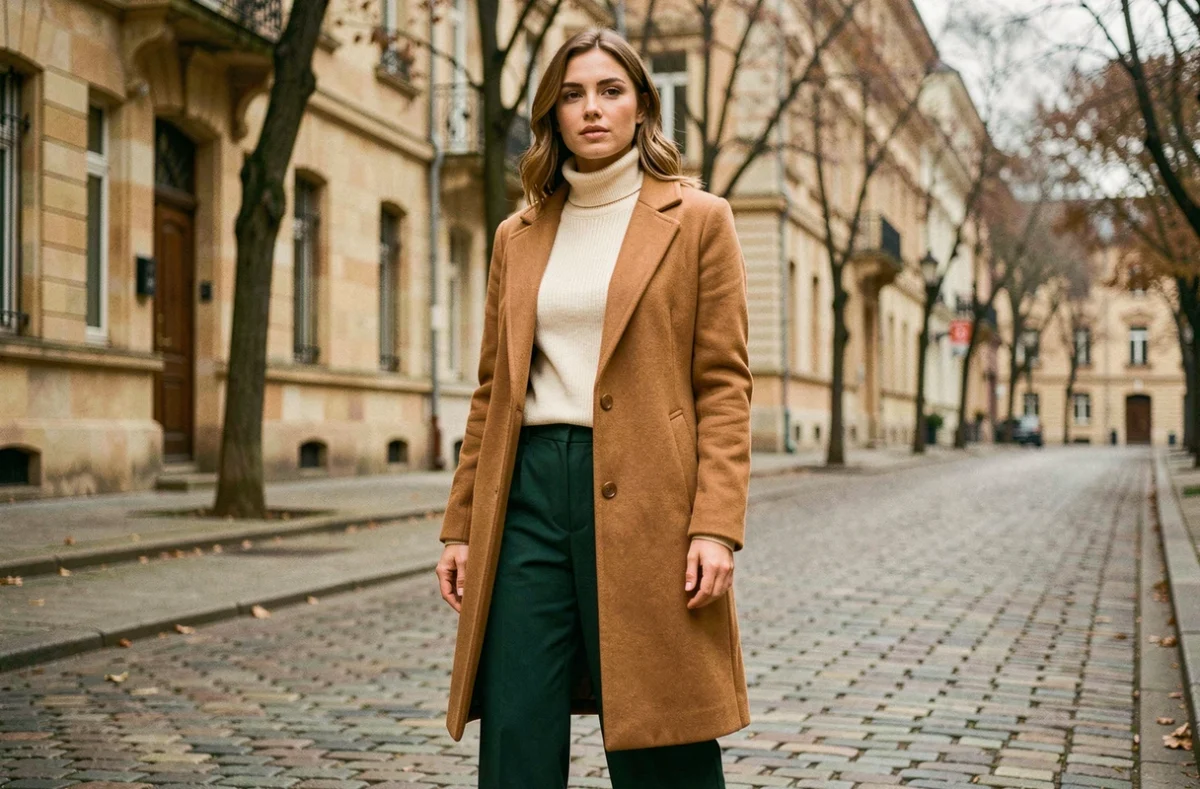
Fashion trends refer to the stylistic directions adopted by designers during fashion shows, which are then translated into wearable pieces by mainstream brands. Each season redefines a balance between cuts, materials, and colors, making the wardrobe more or less easy to update depending on the chosen selections.
Textured materials and layering: the technical foundation of the season
Before discussing colors or silhouettes, the material determines the look of an outfit. This season, textured fabrics are gaining ground: thick ribbed knits, wide-wale corduroy, and felted wools are visible in store windows as early as fall.
The principle of layering different textures structures most of the looks presented on the runways. Pairing a matte fabric (washed linen, brushed cotton) with a shiny fabric (satin, soft leather) creates a visual contrast that adds volume without multiplying layers.
To follow fashion trends on Le Comparatif, this texture logic also guides purchases: a single textured piece is enough to transform a basic solid item.

Denim remains a staple, but it is reinvented with raw or heavily faded finishes. Loose cuts, such as barrel or wide-leg, continue to replace slim styles in the offerings from mainstream brands. Lightweight leather, worn as a short jacket or midi skirt, complements this palette of materials without weighing down the silhouette in the fall.
Autumn color palette: from deep red to butter tones
The standout color of the season is deep red, ranging from burgundy to crimson. This red appears on coats, structured dresses, and accessories (bags, belts, ankle boots). Its strength lies in its ability to stand alone, without needing a fully coordinated look around it.
At the opposite end of the spectrum, butter yellow establishes itself as a soft complementary shade. Worn as a sweater, scarf, or fluid trousers, it brings brightness to dark autumn outfits without falling into overly summery pastels.
Shades of green (olive, sage, emerald) remain present, worn as a standout piece rather than in a total look. The practical rule: one strong color per outfit, the rest in neutral tones. This discipline avoids haphazard combinations and makes each colored piece reusable from season to season.
Pairing colors without a fashion faux pas
Red pairs well with black, heather gray, and off-white. Butter yellow works with navy, beige, and chocolate brown. Memorizing two or three reliable combinations for each strong color simplifies daily outfit construction.
Key pieces to integrate into a seasonal wardrobe
Rather than listing dozens of items, focusing purchases on a few versatile pieces yields better results. Three categories deserve attention this season:
- The structured short jacket (crop blazer, soft leather jacket, boiled wool jacket) that replaces the classic trench for cool, dry days.
- The long-sleeve midi dress, worn alone or over a thin turtleneck, which covers the autumn-winter transition without requiring complex layering.
- The high-waisted wide trousers, in wool or thick denim, that pair well with both sneakers and low-heeled ankle boots.
These three pieces can be combined with each other and with existing basics. The goal is not to renew the entire wardrobe but to add two or three elements that update the style effortlessly.
Second-hand and seasonal fashion: a buying circuit to consider
Sales of second-hand clothing have increased in France in 2025, according to Refashion data reported by TF1 Info. The share of second-hand remains minor in total textile consumption, but brands are developing their own resale circuits, a segment that has progressed more than private sales according to Le Figaro.
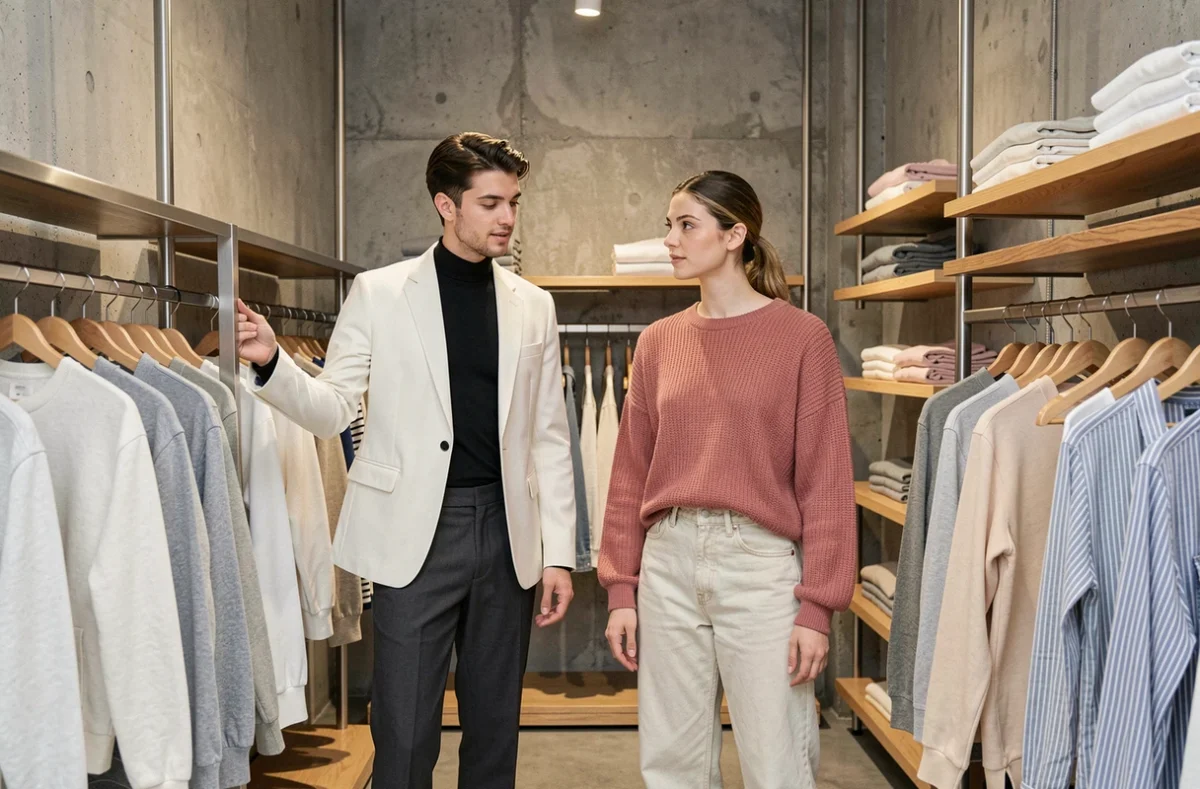
For a seasonal wardrobe, this opens a concrete avenue: looking for a wool coat, a structured blazer, or trendy-cut jeans on a resale platform or in the second-hand section of a store. The financial gain can be significant on high-value items.
However, Refashion emphasizes that reuse only reduces environmental impact when the second-hand item effectively replaces a new purchase. Buying second-hand in addition to regular purchases does not change the equation. Substitution, not accumulation, gives meaning to the approach.
Textile regulation in Europe: what changes for consumers
The European Union is gradually strengthening its regulatory framework on the management of unsold textiles. Large companies are now encouraged to better calibrate their productions, which may reduce massive end-of-season promotions. Unsold items must be redistributed, recycled, or repaired, which feeds into second-hand and clearance circuits.
This regulatory framework enhances the interest in monitoring outlet spaces and end-of-line sales from brands, where quality pieces can appear at reduced prices without going through destruction.
Adapting one’s style to the season does not require a substantial budget or a complete renewal. Two or three well-chosen pieces, in the current materials and colors, are enough to anchor a wardrobe in the present. The rest is a matter of combinations and smart reuse.