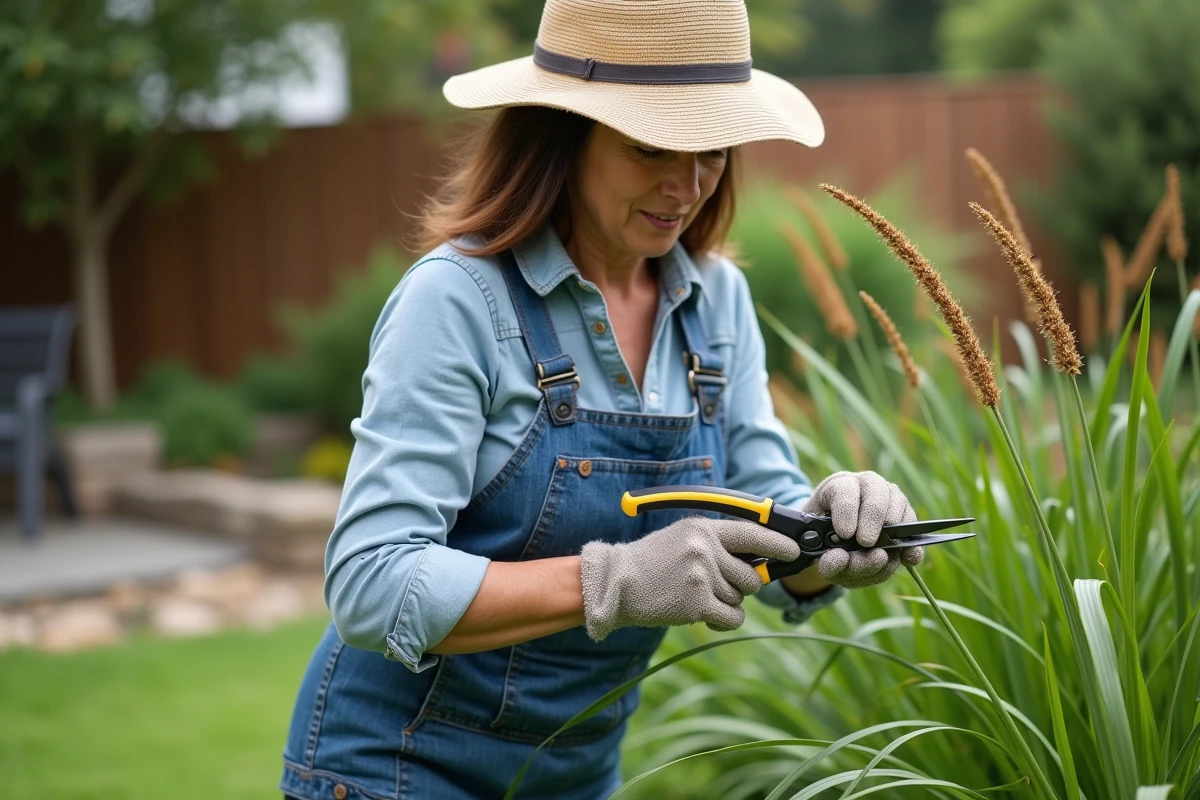
A garden can change in a season: the Japanese horsetail, so elegant in appearance, quickly turns into an unruly conqueror as soon as vigilance is relaxed. Its vigor is matched only by its ability to impose itself everywhere, swallowing borders, colonizing paths, and disrupting the balance of the flowerbed. But beware: while a clumsy pruning can break its silhouette or slow its growth, a lack of maintenance leaves the field open to its underground ambitions. The robustness of horsetail is not a guarantee of impunity; to keep it beautiful and healthy, a firm hand and wise gestures are required.
Mastering the art of pruning is to choose the shape of the Japanese horsetail and tame its energy. Depending on the age of the plant and the desired style, several techniques are available to you, each with its subtleties and results on the garden’s decor.
Japanese horsetail: ideal conditions and tips for proper installation in the garden
The Japanese horsetail, Equisetum hyemale, winter horsetail, is distinguished by its upright habit and deep green stems, which remain persistent even under frost. Native to Asia, this perennial is unmatched for creating modern or Japanese-inspired atmospheres. Its resistance to diseases and insects makes it a reliable choice, but what makes it formidable is its creeping rhizome, always in search of moisture.
To welcome it, it is better to anticipate: a moist soil, even waterlogged, is essential. But be careful, it must remain draining to avoid suffocating the roots. Acidic or calcareous soil is acceptable, but dry or sandy soils are never suitable. It is often installed in a water feature border, in a water garden, or in a pot on a shaded terrace, provided that moisture is monitored.
The planting period extends from spring to autumn, the ideal time for the plant to anchor itself before the first cold. If you want to contain its exuberance, install a rhizome barrier as soon as you plant. A simple roll of vertical tarp is often enough to contain its expansion desires.
To preserve its elegance and prevent it from encroaching on the space of other plants, regular pruning quickly becomes essential. Before you start, look into how to prune Japanese horsetail: a few minutes of information can transform the health of the plant and the harmony of the flowerbed. Choice of soil, water management, and thoughtful pruning: these three levers are enough to master Equisetum japonicum and enjoy a plant that is both decorative and enduring.
How to prune Japanese horsetail for a healthy and aesthetic plant?
The Japanese horsetail imposes its verticality and straight foliage, but without maintenance, it quickly takes over. Pruning structures its form, channels its growth, and prevents entanglement. The ideal time to intervene is at the end of winter or very early spring, just before the young shoots start to rise.
The basic action involves removing at ground level all dry, damaged, or fallen stems. This operation stimulates the production of new, strong shoots. To cut cleanly without harming the plant, use a well-sharpened pruner: the silica contained in the stems can make cutting difficult, but it ensures a clean cut.
Next, observe the clump: remove the stems that overflow or stray from the natural form, in order to maintain a nice compactness. This selection refines the design of the horsetail and avoids a messy effect.
To curb the progression of the creeping rhizome, install a rhizome barrier around the planting area without delay. This simple precaution prevents the horsetail from showing up where it is not wanted and protects neighboring flowerbeds.
The Japanese horsetail tolerates severe pruning without flinching: even when cut back, it regrows from the base. However, two prunings per year are more than enough; multiplying interventions unnecessarily tires the plant.
Don’t neglect waste management: the stems, hard and rich in silica, can be easily shredded to create a mineral mulch, ideal for the damp areas of the garden. Thoughtful, regular pruning transforms the Japanese horsetail into a true backbone of the decor, without ever risking chaos.
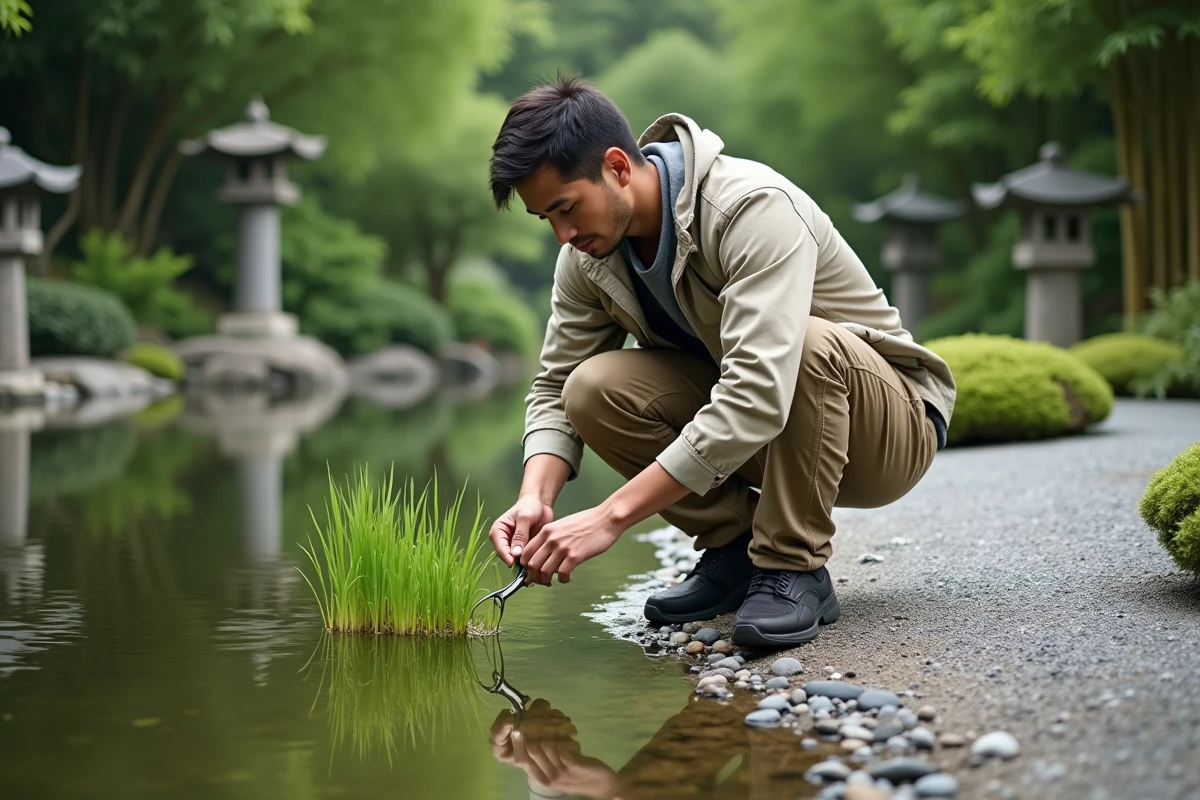
A zen and graphic asset: enhancing your garden with Japanese horsetail
The Japanese horsetail does not do things by halves. Its upright habit, clean lines, and complete absence of flowers give it a unique presence that imposes calm and order in every planted corner. It is the signature of Japanese-inspired gardens, but also of contemporary scenes, where it plays the minimalist card while asserting itself as a visual landmark.
This plant finds its place in many roles: it serves as a natural barrier, is used as a backdrop, structures the bank of a pond, or becomes the centerpiece of a Japanese flowerbed. In a water garden, it captures light and enhances the depth of the water body. Placed in a pot on a terrace, it transforms into a living sculpture, simple and graphic. It is also found in floristry: its sturdy stems last long in a vase, alone or accompanied by grasses, for lasting arrangements.
To create rich and varied scenes, pair the Japanese horsetail with other plants that enhance its qualities. Here are some winning combinations to energize the composition:
- In a Japanese-inspired flowerbed, pair it with Japanese maples and ophiopogons to play on the diversity of greens and shapes.
- By the pond, accompany it with lythrum or primroses to introduce a contrast of colors and textures.
- For a modern ambiance, align it with phormium and hakonechloa to enhance the graphic effect.
The Japanese horsetail embodies both rigor and poetry. It organizes, soothes, and enhances every space, from the zen garden to the terrace corner, without ever going unnoticed. Who would have thought that such an ancient plant could still shake up the codes of contemporary gardening?