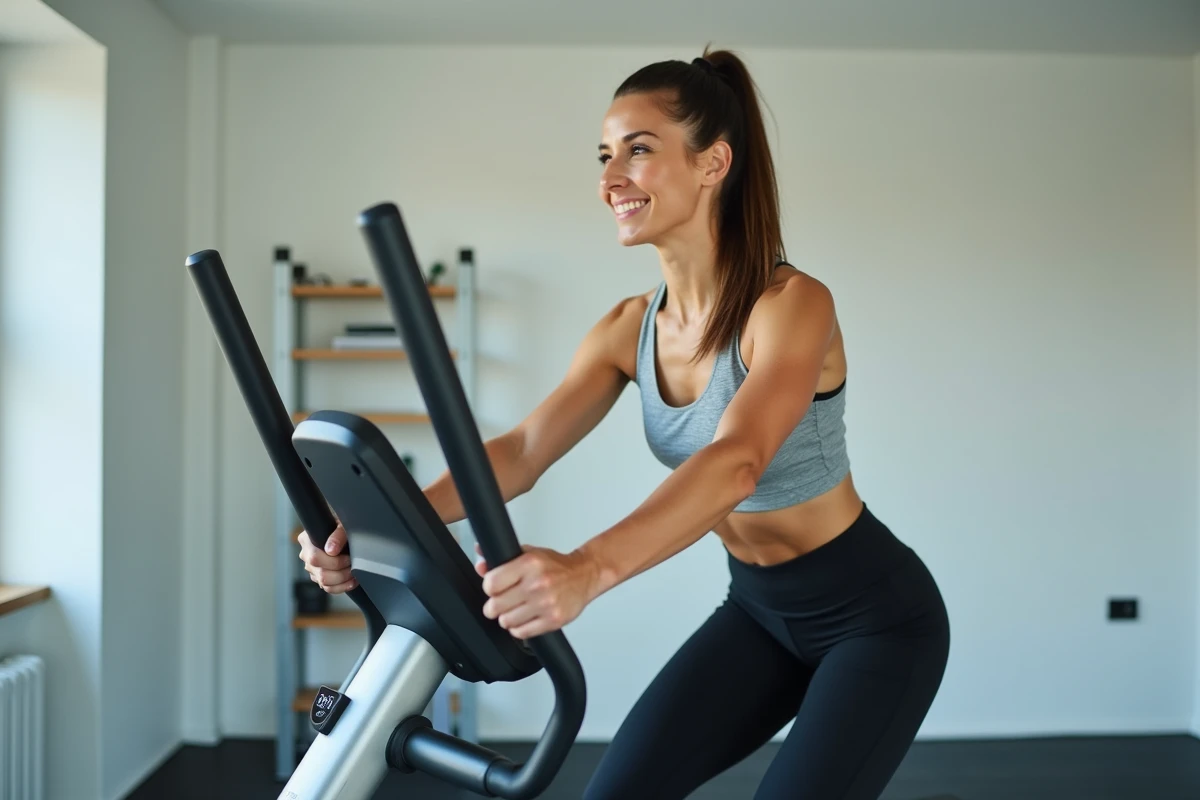
On an elliptical bike, the cadence displayed in rpm (revolutions per minute) catches the eye. Many users adjust their speed based on feel, without realizing that this number only represents part of the actual intensity. Understanding how to utilize speed in rpm allows you to tailor each session to a specific goal, whether it’s burning calories, protecting your joints, or improving endurance.
Why the displayed rpm varies from one elliptical to another
Have you ever noticed that when pedaling at the same pace on two different machines, the screen does not show the same cadence? This is not a perception error. Validity studies on fitness ellipticals have highlighted systematic discrepancies in cadence between models, even within the same brand.
The reason lies in the rotation sensors and proprietary calculation algorithms. Each manufacturer interprets the movement of the flywheel in its own way. A rear-wheel device does not measure rotation the same way as a front-wheel model.
The practical consequence is simple: comparing your rpm from one machine to another makes no sense. If you switch machines in the gym or move from a home elliptical to a club model, recalibrate your benchmarks. To delve deeper into this topic, check out this guide on rpm speed on elliptical bikes. The displayed number serves as an internal reference for a given device, not a universal value.
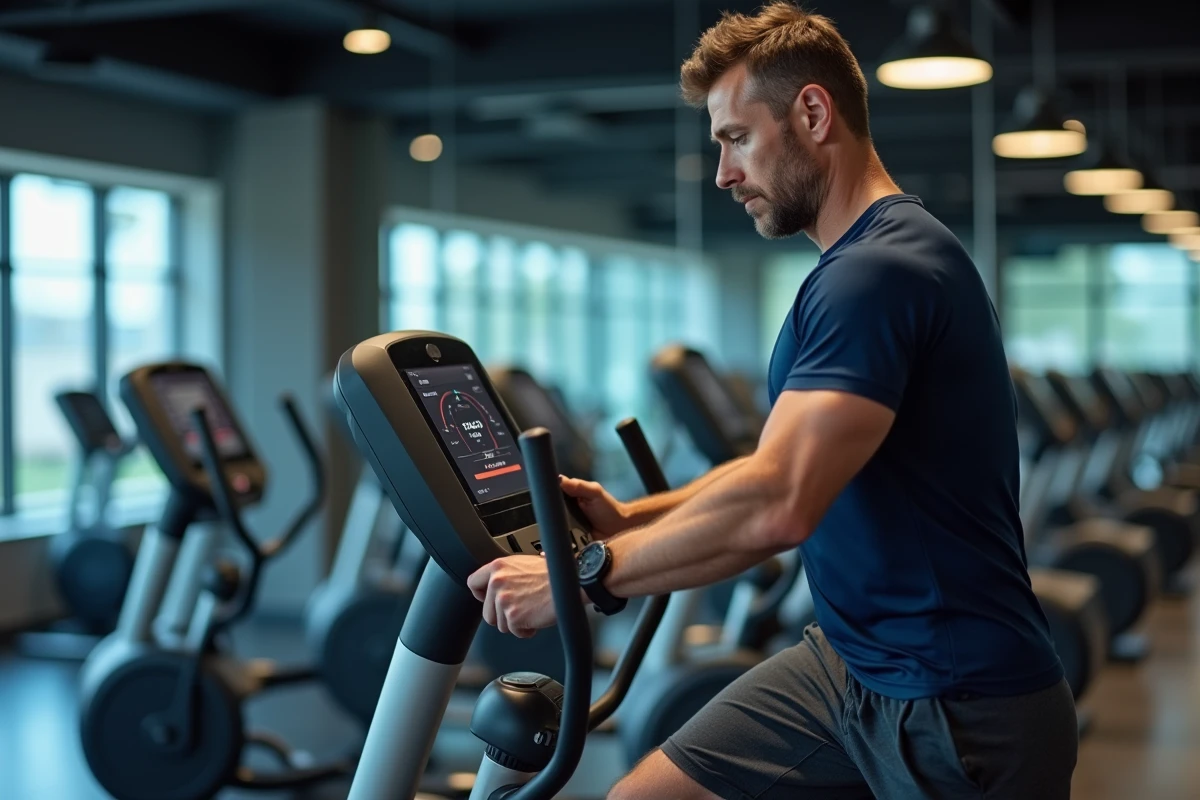
Cadence rpm and resistance: the duo that determines actual intensity
Peddling fast does not mean working hard. On an elliptical, intensity depends on the cadence-resistance ratio, not on cadence alone. Spinning at high cadence with minimal resistance places little demand on the cardiovascular system and even less on the muscles.
Conversely, high resistance with very low cadence produces concentrated muscular effort on the quadriceps and glutes, but reduces the cardio component. The goal is to find the balance point suited to your aim.
High cadence and low resistance for the joints
Recent ergonomic studies show that a higher cadence (beyond 70-80 rpm) combined with low resistance generates less joint load on the knee than a low cadence with high resistance, at equivalent heart intensity. This setting is suitable for individuals suffering from patellofemoral pain or early-stage osteoarthritis.
Moderate cadence and progressive resistance for energy expenditure
To increase calorie expenditure, it’s better to raise the resistance by one or two notches while maintaining a stable cadence around 60-70 rpm. The body recruits more muscle fibers, the heart rate rises, and the session becomes more demanding without speeding up the movement.
Heart rate and perceived effort before rpm
The cardiac rehabilitation protocols published by the European Society of Cardiology in its 2023 recommendations position cadence on the elliptical as a secondary reference, behind heart rate and the rate of perceived exertion (RPE). The logic is the same for a healthy practitioner.
Why this choice? Because two people pedaling at the same cadence on the same machine do not exert the same effort. Body weight, training level, and leg length alter the actual load. Rpm remains useful as an indicator of consistency, but it does not replace a heart rate monitor or an honest self-assessment of perceived difficulty.
The RPE scale works from 1 to 10. A moderate effort falls between 4 and 6: you can speak in short sentences without being out of breath. An intense interval reaches 7-9: speaking becomes difficult. Adjust resistance and cadence to stay within the target zone, rather than aiming for an arbitrary rpm number.
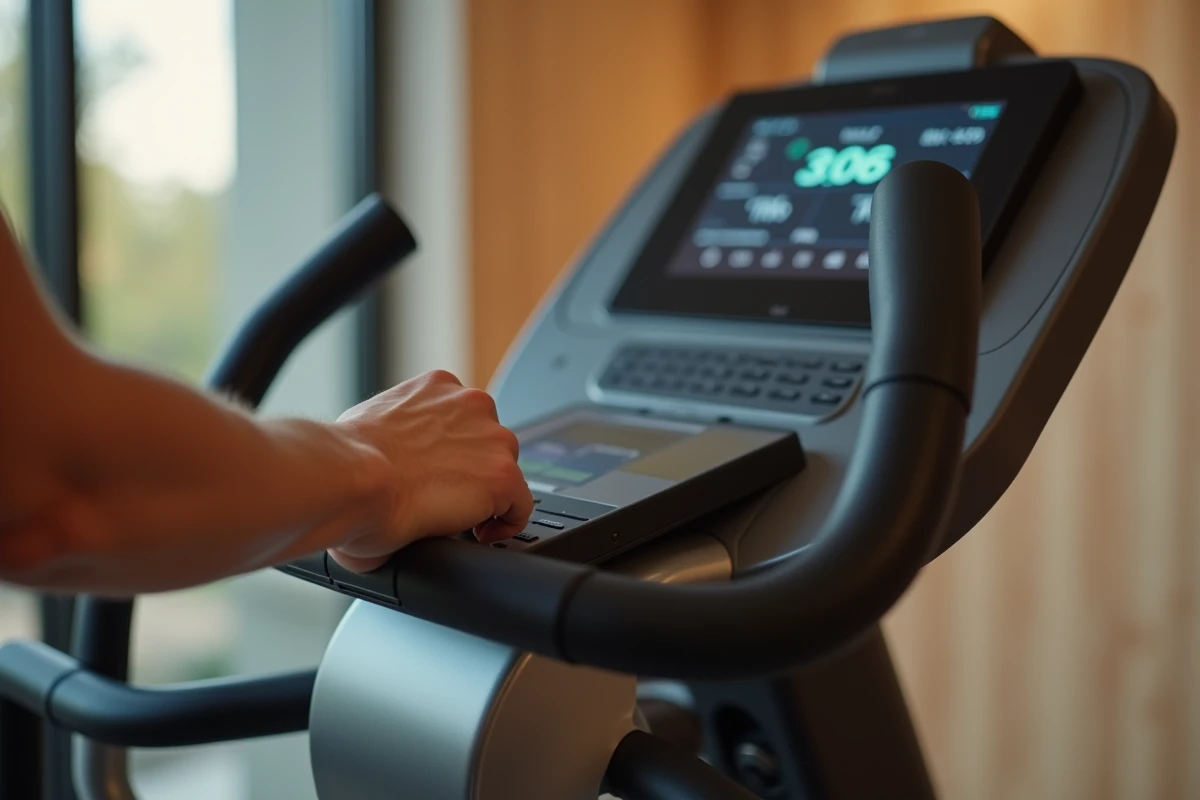
Building an elliptical session using cadence as a reference
Rather than setting a rpm goal for the entire session, use cadence as a structuring tool. Here’s a scheme applicable on most ellipticals:
- Warm-up (5 to 8 minutes): low resistance, free and progressive cadence. Let the body warm up without forcing the pace.
- Main work phase: alternate blocks of sustained cadence (moderate resistance) with blocks of high resistance (lower cadence). Each block lasts 2 to 4 minutes depending on your level.
- Cool down (3 to 5 minutes): gradually lower resistance and cadence. Your heart rate should come down before leaving the machine.
This format adapts whether you have twenty minutes or forty-five. Variation in cadence creates the training stimulus, not the raw duration spent on the machine.
Adapting cadence to your goal
A practitioner looking to improve their base endurance will maintain a steady cadence during long blocks, with a stable heart rate. Those aiming for interval training (HIIT) will alternate very fast phases with slow phases.
For muscle strengthening, resistance takes precedence over cadence. Increase the resistance until you feel a clear effort in your thighs and glutes, even if the cadence drops below 50 rpm. The machine then serves a role similar to the leg press, in a dynamic version.
Three common mistakes related to rpm on ellipticals
- Relying solely on the displayed speed without considering resistance. A screen showing 120 rpm with a resistance of 1 indicates no real effort.
- Comparing your rpm with those of another user or another machine. Since sensors differ, this comparison is misleading.
- Keeping the same cadence and resistance session after session. The body quickly adapts to a repetitive stimulus. Varying the cadence-resistance combinations forces progression.
The rpm number on your screen is a tool, not an end in itself. It makes sense when cross-referenced with the selected resistance, measured heart rate, and subjective perception of effort. A practitioner who masters these four parameters gains much more from each session than one who pedals fast with their eyes glued to the counter.